The One That Got Away

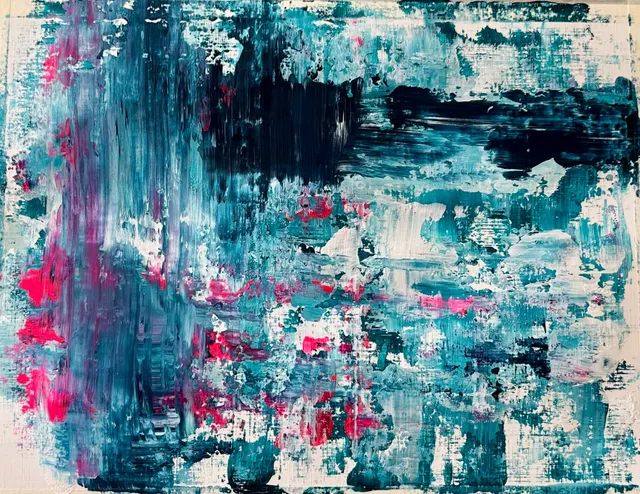
Not every painting makes it to the wall. This is one of those paintings.
There have been many times when a painting just doesn’t come together for me. I have a name for these paintings. Rather than say, it hasn’t worked, or that it’s no good, I prefer to say it’s ‘unresolved’.
I’m not being precious here, and it’s more than just semantics. As an artist I think that how you talk about your work and, maybe more importantly, how you think about it, is actually a vital element.
We’re not talking about absolutes here. This isn’t mathematics where there are binary notions of right or wrong. Paintings after all, like any form of creative expression, are subjective. By saying it is unresolved, I merely put it to one side to think about it at some point in the future. There is no real judgement and no angst about it.
What I Was Aiming For
I normally start with an emotion from a memory rooted in sound and place that I want to revisit in paint. On this occasion, I wanted to go back into a memory which had yielded a prior painting, one that I had completed some two months previously called Snowscape. My aim was to explore the same memory but instead of painting on stretched canvas, I wanted to work on specialist paper. Snowscape had been in a square format, and with this new piece, I wanted to paint in landscape format at 16 x 20 inches.
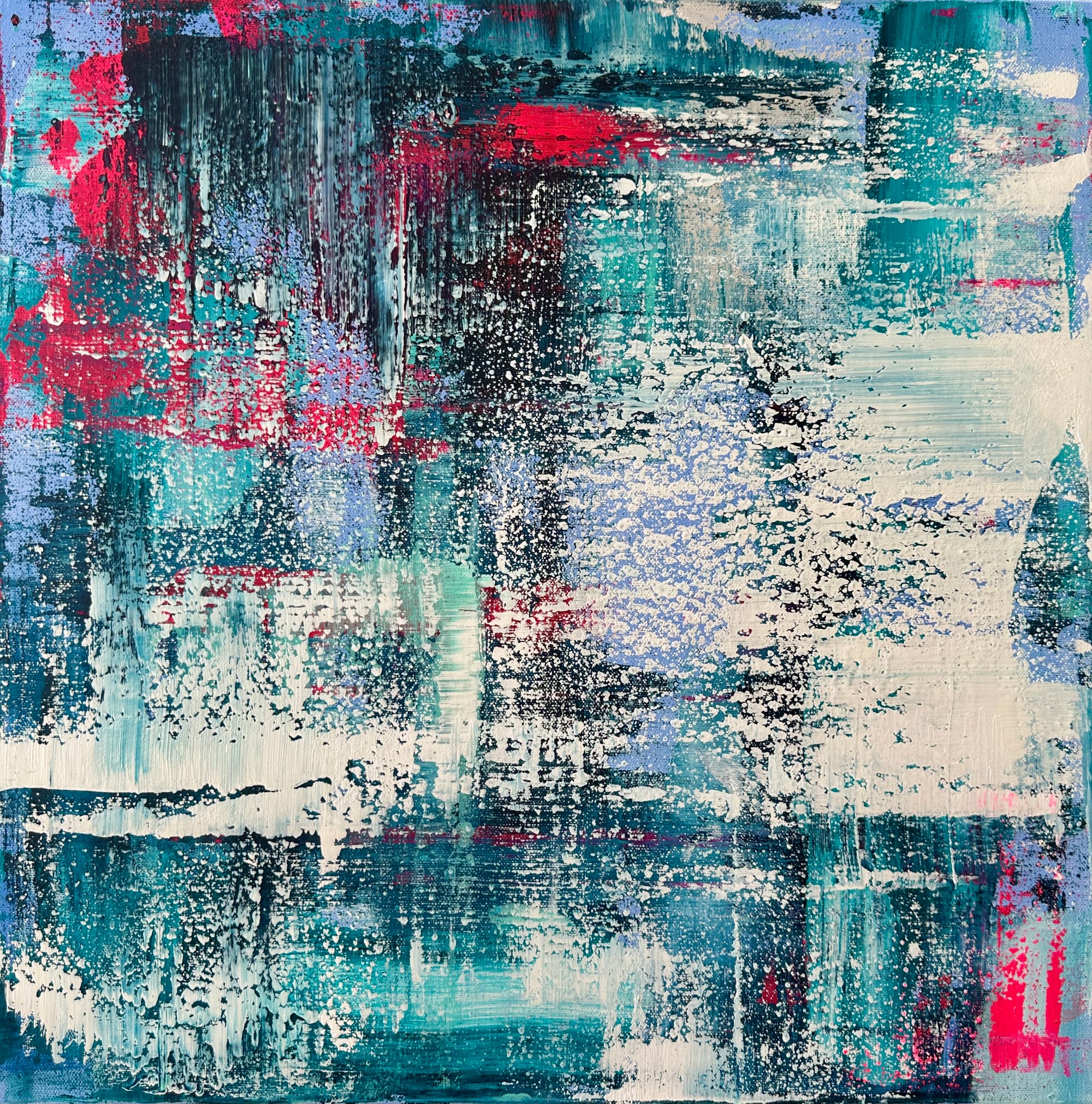
I initially recollected memories from a winter’s evening in London’s Soho district over twenty years ago. I recalled walking through the narrow lanes and hearing cars driving through slush and the dampened, contained sounds during the snowfall.
Where It Went Awry
When painting, I often stop and assess. I might even step back and squint at the painting, gauging values, colour choices, form and texture. More importantly is the question: does this work evoke the feeling of the memory I have of the sounds and the place?
Sometimes, I forget to stop and step back. This is what happened here. There was no pause. No space. Consequently, I applied too much paint and by the time I realised, it was too late.
Naturally, I tried to bring it back by taking away layers of paint, but working on paper is a different story. The paper buckles easily and then it’s harder for me to apply further layers.
What I Learned
I took away quite a few lessons. First, on a psychological level, I have to accept that not every painting is going to work out. I know if I am precious about materials and aim for perfection (whatever that is) then that just heaps pressure on me. The well-known Cornish painter David Mankin once commented that if a painting doesn’t work out he places it aside and works on another, there’s no anxiety there, and that sums up my feeling too.
I know this about myself, but I still forget it: I need to give a painting time to breathe. I should rather take my time and step back every now and then to engage the critical side of my mind. I want to work in a flow state most of the time, but that critical eye needs to come in at intervals. It’s all about balance.
Third, I learned that a painting can’t always be saved by adding more paint, especially on paper. Sometimes, it’s best just to put it aside and form a view much later.
What Now?
I will revisit my memories from that night once again on paper, but for now, I have decided not to force it. That’s the beauty of my practice; I have so many clear memories that I can simply turn my attention to a different occasion with another set of emotions attached.
For now, the painting can sit quietly in the studio. Perhaps I'll come back to it. Perhaps I won't.
The memory, though, isn't going anywhere.
Philip